
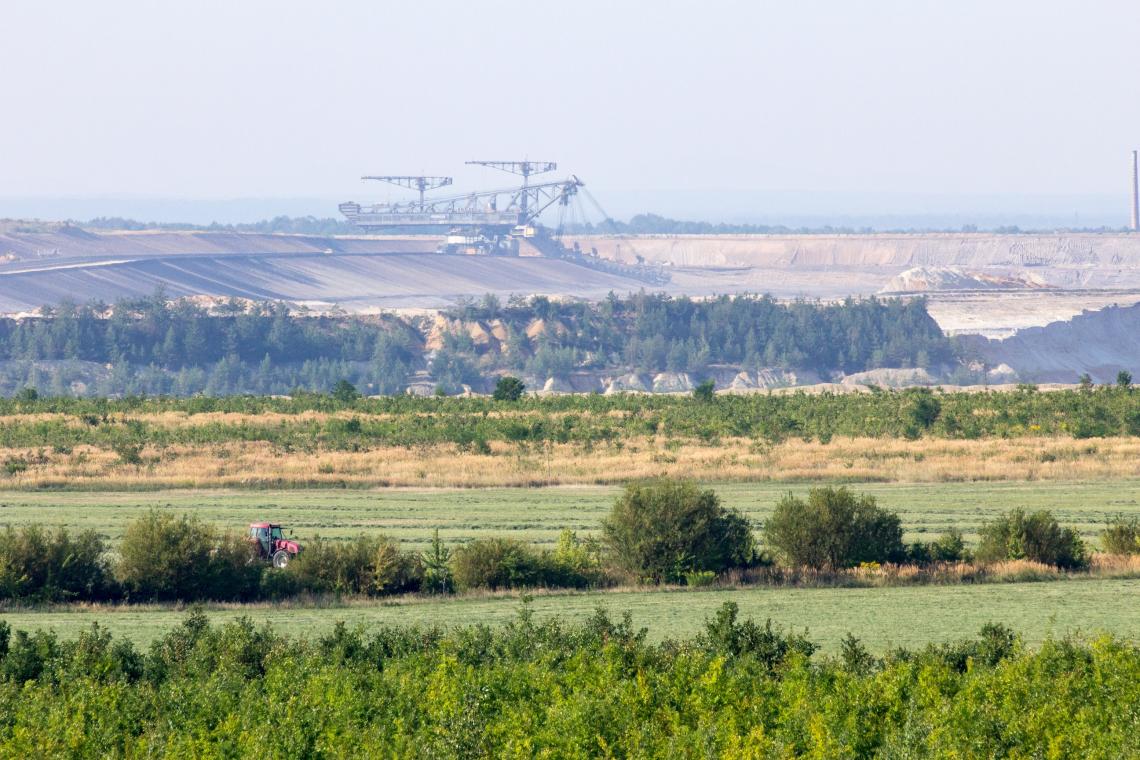
The Saxon State Office for Environment, Agriculture and Geology (LfULG) in Germany has signed the Mission Soil Manifesto, reinforcing its commitment to sustainable land use. By signing, the regional authority highlights the crucial role regional bodies can play in protecting soil health and shaping resilient landscapes for the future.
The Saxon region is facing a major challenge: transforming a landscape that has been used for brown coal production for 150 years. Through an inclusive process that considers diverse interests, the LfULG is charting a future-oriented course for this transformation.
Soil and water at the core of transformation
Through the project RegioNet WasserBoden (Regional Networks for Sustainable Water and Soil Management), the LfULG is developing and testing a land assessment tool for the sustainable management of brownfield and compensation sites. Using this tool, previously industrial or commercial areas that have since fallen into disuse are identified and evaluated for reuse, de-sealing or renaturation.
This approach helps protect valuable soils because less new land needs to be sealed and lost soil functions can be restored. Importantly, it is a model that can be transferred to other regions.
‘The phase-out of lignite mining in east and central Germany requires a rapid, well-supported transformation. It is vital to not forget about the importance of protecting soil as a natural resource while soil protection shouldn´t be a reason for the obstruction of transformation. Instead, soil protection should guide balanced decisions and provide clear options. This is both our challenge and a daily motivation.’
Saxon State Office for Environment, Agriculture and Geology (LfULG)
Protecting soil as a natural resource is at the heart of this effort. Soil protection should not become an obstacle to transformation but should support informed, balanced decision-making.
From studies to practical solutions
Beyond mapping natural resources, the project includes feasibility studies for nature conservation. For instance, one study analyses the potential for rewetting and peatland restoration in an approximately 140-hectare study area on former peatland sites near an open-cast mine.
To strengthen soil protection and ensure safe handling of soil during construction, the project develops practical, application-oriented recommendations for soil science construction monitoring. This work is carried out in consultation with various stakeholder groups.
LfULG emphasises that transformation succeeds only when people are involved. The office brings together stakeholders from municipalities, public authorities and other sectors.
‘As part of the RegioNet WasserBoden project, we organise specialist workshops and events for regional actors from municipalities and public authorities. Furthermore, LfULG also invites schools, universities, and the wider public to visit our soil nature trails or join guided hikes to learn more about the soil and its vital functions. In addition, we provide a wide range of free information and geodata on soil via our websites.’
Saxon State Office for Environment, Agriculture and Geology (LfULG)
This inclusive approach builds awareness and ensures that the project’s impact lasts beyond typical funding cycles. The results are consolidated through the networks created, permanently available data, and the practical methods and evaluation tools developed during the project.
Show your commitment to soil
Sign the Mission Soil Manifesto today and take an active role in shaping a sustainable future for soils. Municipalities, regions and local authorities that join can demonstrate leadership and show their commitment to balanced land-use transformation.
By signing this non-legally binding document, either as an individual or as a representative of an entity, you help make soil protection a stronger part of long-term planning and decision-making in the EU.
Learn more about the legal entities that have signed the Mission Soil Manifesto so far. Every signature helps strengthen momentum for soil health across Europe.